



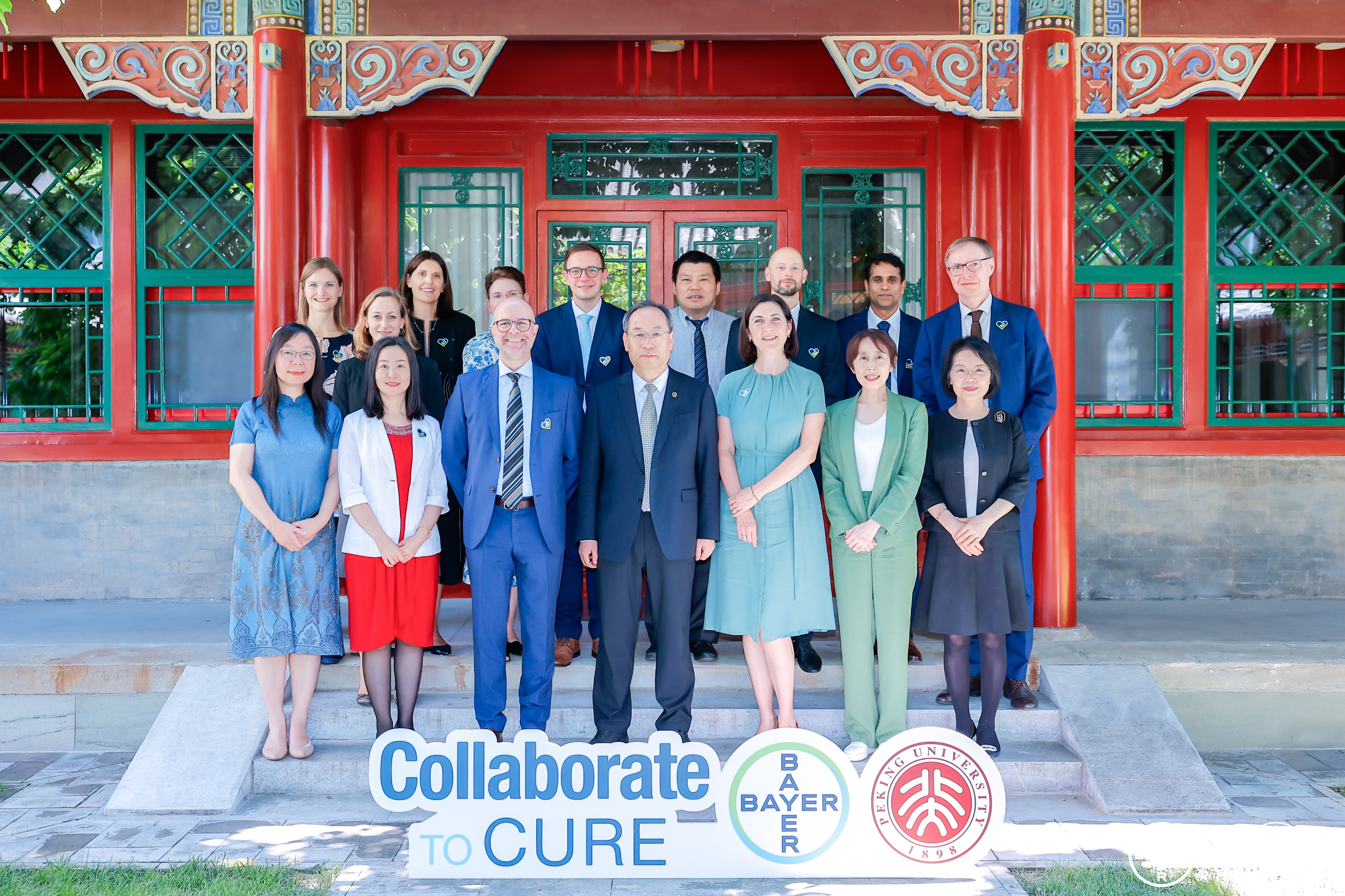
Beijing, June 11, 2026 – Bayer and Peking University (PKU) today signed the fifth strategic collaboration agreement. In key selected areas of interests, including oncology, cardiorenal, neurology, and immunology, the two parties aim to explore new targets and disease pathogenesis mechanisms, enhance artificial intelligence (AI) enabled drug discovery capabilities, and fully utilize target identification platforms as well as modality understanding. These efforts are intended to further facilitate the translation of scientific research outcomes into drug discovery and innovation, accelerating the application of cutting‑edge science and technologies across the drug research and development value chain.
Under the agreement, over the next three years, Bayer will continue funding joint research projects and scientists at PKU in recognition of their research excellence in life sciences and drug innovation, and continue to conduct international academic exchange activities between drug R&D experts and scientists from both sides.
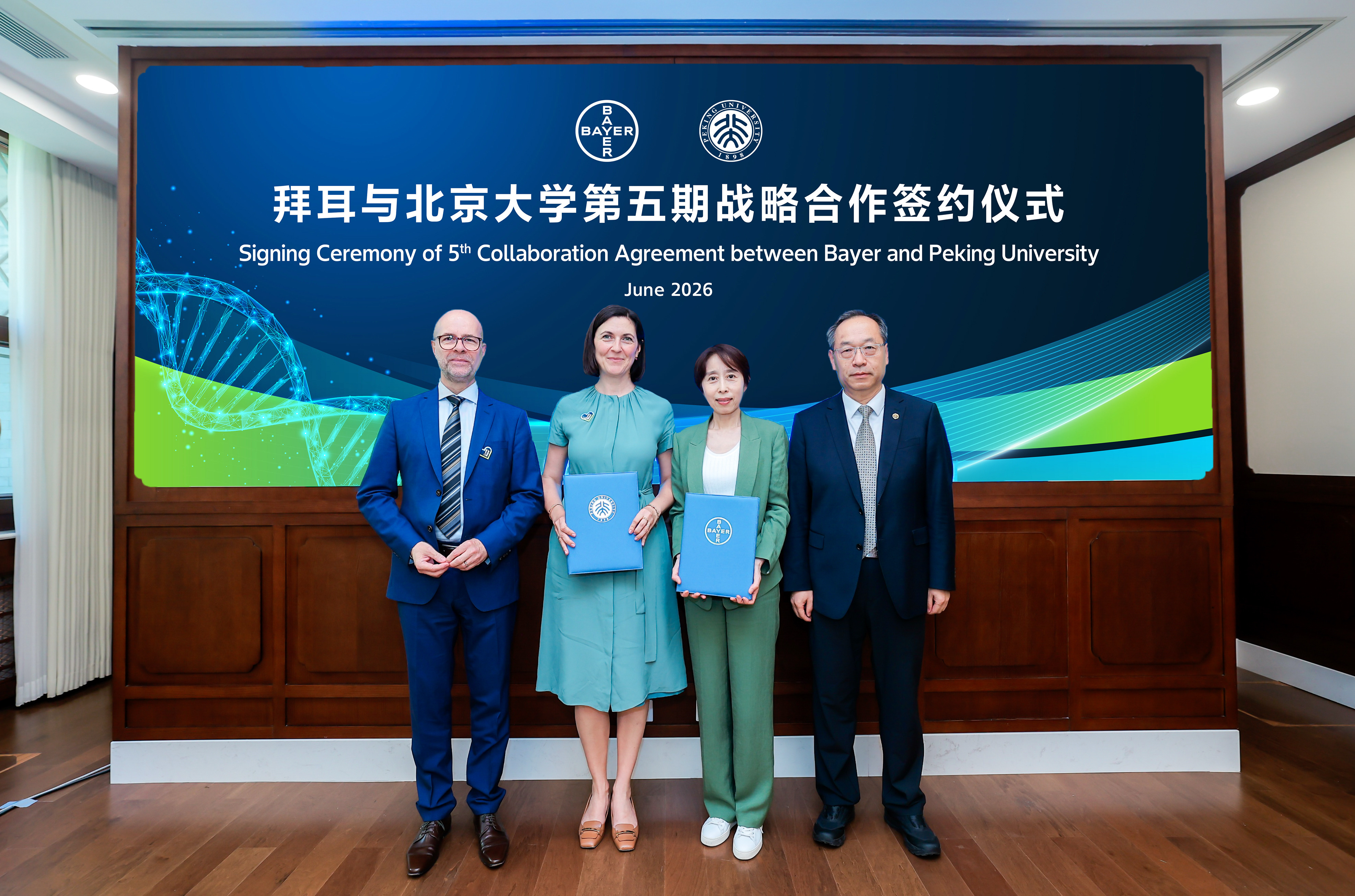
“Our partnership between Bayer and Peking University has become a reference of scientific research collaboration between multinational pharmaceutical companies and renowned Chinese academic institutions. This strategic partnership not only reflects Bayer’s recognition on China’s innovation capabilities, but also demonstrates our unwavering commitment to promoting translational research and innovative drug discovery. By combining the mutual expertise, resources and talents, we believe the partnership can accelerate the discovery of innovative medicines and bring more novel treatments to patients globally,” said Dr. Christian Rommel, Executive Vice President, Global Head of Research and Development and Member of the Pharmaceuticals Leadership Team at Bayer Pharmaceuticals.
“Peking University is committed to fostering the integration of fundamental research and industrial innovation. Since the establishment of our strategic partnership in 2014, Peking University and Bayer have built a high-level collaborative platform that has generated impactful achievements in frontier research, innovative drug discovery, and talent development. The signing of the Phase V agreement marks a new chapter in our partnership. Looking ahead, we look forward to leveraging Peking University’s interdisciplinary strengths together with Bayer’s global expertise in pharmaceutical R&D and translation, deepening collaboration in disease biology, novel target discovery, and AI-enabled drug development, and transforming scientific discoveries into innovative solutions that improve human health worldwide,” stated Professor Jing Zhang, Executive Vice President of Peking University.
In 2014, Bayer established a strategic research partnership with PKU, setting up a joint research center at the university to advance translational drug discovery research. Bayer provides funding support for these collaborative research projects. Bayer and PKU have conducted more than 30 joint research projects, published eight co-authored papers in top international scientific journals, and filed a PCT patent application for a novel cancer therapy.
In addition to joint research collaborations, Bayer Endowed Chair, Bayer Investigator and Bayer Postdoc have been founded under the partnership to recognize and support distinguished scholars who have outstanding scientific achievements in life sciences and drug innovation. Prof. Ning Gao, Prof. Sunney Xiaoliang Xie, Prof. Xiang Yu, Prof. Feng Gai, Prof. Xuemei Chen, Prof. Chunhua Yan and Prof. Cunyu Wang from PKU have been honored as Bayer Endowed Chair.
“Over the past decade, Bayer and Peking University have built a trusted and mutually beneficial partnership. Together, we have advanced collaborative research in novel target discovery, disease mechanisms, structural biology, and emerging therapeutic modalities, demonstrating the tremendous value of academia–industry collaboration. Looking forward, we hope to further evolve our partnership toward a more integrated and challenge-driven model, bringing together multidisciplinary expertise across Peking University to address important scientific and clinical questions. By working closely with Bayer, we aim to accelerate the translation of fundamental discoveries into innovative therapies that benefit patients around the world,” said Professor Xuemei Chen, Member of the Bayer-Peking University Joint Steering Committee, Dean of the School of Life Sciences at Peking University.
“We are delighted to embark on a new chapter of our collaboration with Peking University. We look forward to further driving the translation of basic research into clinical applications serving patients in need. With the renewed agreement, we are more than ever committed to strengthen our collaboration, identifying novel targets, exploring innovative modalities and artificial intelligence, jointly advancing breakthrough innovation from drug discovery to clinics. With that, we are shaping a future where science, technology, and collaboration translate into meaningful impact to patients,” said Dr. Anastasia Hager, Member of the Bayer-Peking University Joint Steering Committee, Senior Vice President of Global Research and Development and Head of Drug Discovery Science at Bayer Pharmaceuticals.
Academic collaborations have been an integral part of Bayer’s long-standing commitment on fostering drug innovation originated in China and the translation of drug discovery and research. In 2009 and 2014, Bayer established strategic collaborations with Tsinghua University and Peking University respectively. As of now, Bayer and the two prestigious universities have carried out over 110 joint research projects, including discovery and structural analysis of novel targets, pathogenesis and drug mechanisms of action research, drug screening, efficacy evaluation as well as exploration on new modalities, new synthetic methods and innovative formulations.
About Bayer
Bayer is a global enterprise with core competencies in the life science fields of health care and nutrition. In line with its mission, “Health for all, Hunger for none,” the company’s products and services are designed to help people and the planet thrive by supporting efforts to master the major challenges presented by a growing and aging global population. Bayer is committed to driving sustainable development and generating a positive impact with its businesses. At the same time, the Group aims to increase its earning power and create value through innovation and growth. The Bayer brand stands for trust, reliability and quality throughout the world. In fiscal 2025, the Group employed around 88,000 people and had sales of 45.6 billion euros. R&D expenses amounted to 5.8 billion euros. For more information, go to www.bayer.com.
Forward-Looking Statements
This release may contain forward-looking statements based on current assumptions and forecasts made by Bayer management. Various known and unknown risks, uncertainties and other factors could lead to material differences between the actual future results, financial situation, development or performance of the company and the estimates given here. These factors include those discussed in Bayer’s public reports which are available on the Bayer website at www.bayer.com. The company assumes no liability whatsoever to update these forward-looking statements or to conform them to future events or developments.
Bayer AG is a holding company with operating subsidiaries worldwide. References to “Bayer” or “the company” herein may refer to one or more subsidiaries as context requires.